Best Joint Supplements (2026): Ranked by Clinical Evidence
Joint supplements are a $5+ billion category in the US alone, and most of it is driven by glucosamine products that use the wrong form. The clinical evidence for joint supplements is actually quite strong for specific compounds at specific doses, but the gap between what research supports and what the average consumer buys is enormous. This comparison ranks the five compounds with the best human trial data for joint comfort and function, explains how each one works differently, and gives you realistic timelines for results.
Joint Compounds Ranked by Clinical Evidence
| Compound | Mechanism | Clinical Evidence | Effective Dose | Onset Time | Monthly Cost | Best For |
|---|---|---|---|---|---|---|
| Glucosamine Sulfate (crystalline) | Cartilage matrix substrate, mild anti-inflammatory | Strong. 3-year GUIDE trial showed reduced joint space narrowing. Multiple European RCTs positive. | 1,500mg/day (single dose or split) | 4-8 weeks for symptom relief; structural benefits at 1-3 years | ~$15-25 | Long-term joint structure preservation in knee OA |
| UC-II Collagen (undenatured type II) | Immune modulation via oral tolerance (stops immune attack on cartilage) | Strong. Head-to-head trial beat glucosamine+chondroitin. 180-day RCT positive. | 40mg/day on empty stomach | 8-12 weeks | ~$20-30 | Exercise-related joint stress, active adults wanting convenience (1 pill/day) |
| Curcumin (with piperine or lipid carrier) | Anti-inflammatory (COX-2, NF-kB inhibition). Does not rebuild cartilage. | Strong. Multiple meta-analyses show OA pain reduction comparable to NSAIDs. | 500-1000mg/day bioavailable form (Meriva, BCM-95, Theracurmin) | 2-4 weeks for pain relief | ~$20-40 | Osteoarthritis pain and inflammation, NSAID alternative |
| Omega-3 (high EPA) | Anti-inflammatory (resolvin and protectin production from EPA) | Moderate. Trials show reduced morning stiffness and NSAID use in RA. Less data for OA specifically. | 2-4g EPA+DHA/day (high-EPA ratio preferred) | 4-8 weeks | ~$25-45 | Inflammatory joint conditions (RA), general anti-inflammatory support |
| MSM (methylsulfonylmethane) | Sulfur donor for connective tissue, mild anti-inflammatory | Moderate. Several RCTs show pain and function improvements in knee OA. Effect sizes modest. | 1,500-3,000mg/day | 4-8 weeks | ~$10-18 | Affordable adjunct to other joint compounds, mild-moderate OA |
Evidence ratings reflect the volume and quality of published human clinical trials. Monthly costs reflect effective clinical doses from reputable brands at typical retail pricing (mid-2026). Onset times represent typical response patterns from trial data; individual variation is significant. All compounds have data primarily in knee osteoarthritis unless otherwise noted.
Our Honest Assessment
The Critical Distinction: Glucosamine Sulfate vs. Glucosamine HCl

This is the single most important thing to understand in the joint supplement category: glucosamine sulfate and glucosamine HCl are not interchangeable, despite being sold side by side on pharmacy shelves.
The positive evidence for glucosamine comes almost entirely from European trials using crystalline glucosamine sulfate (the Rottapharm/DONA form). The 3-year GUIDE trial showed measurable reduction in joint space narrowing on X-ray, a true structural endpoint. Multiple other European RCTs showed significant symptom improvement over placebo.
The GAIT trial (Clegg et al., NEJM, 2006), which is the study most often cited to argue "glucosamine doesn't work," used glucosamine HCl. This is a different salt form with different pharmacokinetics and, apparently, different clinical effects. The GAIT trial found glucosamine HCl no better than placebo for the overall study population.
Most American glucosamine products use the HCl form because it is cheaper to manufacture. If you are buying glucosamine based on the positive European evidence, you need the sulfate form specifically, ideally the crystalline (Rottapharm/DONA) version used in the trials. This is not a trivial marketing distinction. It is the difference between a compound with 3-year structural data and one that failed its largest trial.
UC-II Collagen: A Different Mechanism Entirely

UC-II (undenatured type II collagen) is not a building block for cartilage. Regular hydrolyzed collagen peptides are building blocks. UC-II works through an entirely different mechanism called oral tolerance, where small amounts of intact type II collagen, taken on an empty stomach, retrain the immune system to stop attacking cartilage in the joints.
The head-to-head trial (Lugo et al., International Journal of Medical Sciences, 2009) randomized subjects to either 40mg UC-II or 1,500mg glucosamine + 1,200mg chondroitin for 180 days. UC-II produced more than double the improvement in joint function scores (WOMAC) compared to the glucosamine+chondroitin arm. One small pill, taken on an empty stomach, outperformed the traditional multi-gram glucosamine protocol.
The key requirement: UC-II must be taken on an empty stomach for the oral tolerance mechanism to work. If taken with food, the collagen is simply digested like any protein. This makes timing important. First thing in the morning (30 minutes before breakfast) or before bed (2+ hours after last meal) are the most practical windows.
Curcumin: The Fastest Relief, But No Structural Benefit
Curcumin is the anti-inflammatory compound in turmeric. Multiple meta-analyses confirm it reduces osteoarthritis pain with an effect size comparable to NSAIDs like ibuprofen, but without the GI and cardiovascular risks of chronic NSAID use.
The critical requirement: bioavailability enhancement. Standard curcumin powder absorbs at less than 5%. The forms with clinical evidence are specific enhanced formulations:
- Meriva (curcumin-phospholipid complex): ~29x absorption vs. standard
- BCM-95 (curcumin + essential oils): ~7x absorption
- Theracurmin (nanoparticle): ~27x absorption
- Curcumin + piperine (black pepper extract): ~20x absorption
Standard turmeric powder or plain curcumin extract (95% curcuminoids, no bioavailability enhancement) will not deliver clinical results regardless of dose. The enhanced form is not optional; it is the difference between an effective supplement and expensive urine.
The limitation: curcumin addresses inflammation and pain but does not rebuild cartilage. For comprehensive joint support, pair it with a structural compound (UC-II or glucosamine sulfate). Curcumin handles the symptom; the structural compound addresses the underlying degradation.
Omega-3: Strongest for Inflammatory Arthritis
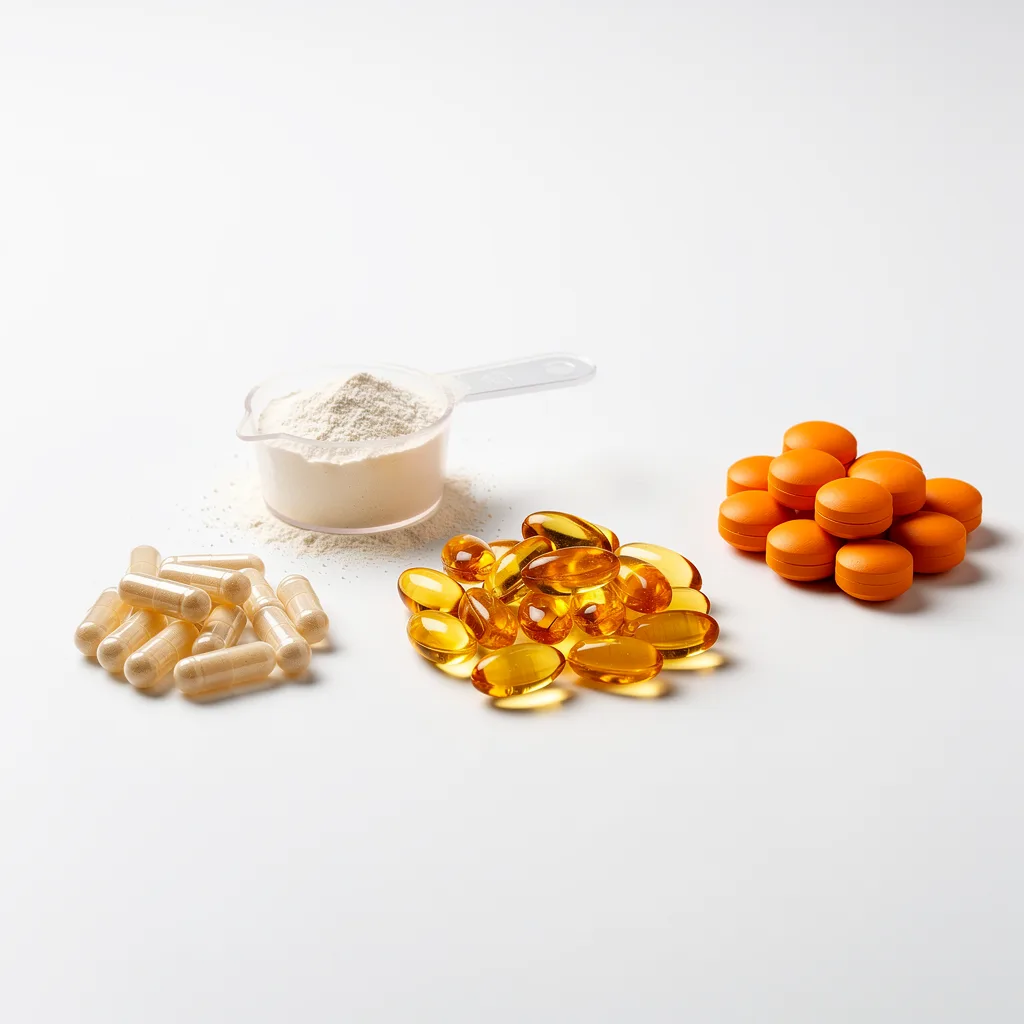
High-dose omega-3 (2-4g EPA+DHA daily, with a high EPA ratio) has the strongest evidence in rheumatoid arthritis and other inflammatory joint conditions. Trials show reduced morning stiffness, decreased NSAID use, and improved grip strength. The mechanism is production of specialized pro-resolving mediators (resolvins, protectins, maresins) from EPA that actively resolve inflammation rather than just blocking it.
For osteoarthritis specifically, the evidence is less direct. OA has an inflammatory component, but it is primarily a mechanical/degenerative condition. Omega-3 may help the inflammatory aspects of OA but is not the primary intervention for cartilage preservation. If your joints hurt primarily from inflammation (warmth, swelling, morning stiffness that improves with movement), omega-3 is a strong choice. If the issue is primarily mechanical wear (pain that worsens with activity, no significant swelling), structural compounds are more appropriate.
MSM: The Affordable Adjunct
MSM provides bioavailable sulfur, which is a building block for connective tissue (particularly glycosaminoglycans and collagen cross-links). Several RCTs at 1,500-3,000mg/day show statistically significant improvements in pain and physical function scores in knee OA, though effect sizes are modest compared to curcumin or UC-II.
Where MSM makes sense: as an affordable addition to a primary joint supplement. At $10-18/month for clinical doses, it has a favorable cost-to-benefit ratio even with its more modest effects. It is also extremely well-tolerated with minimal side effects, making it a safe complement to any of the other four compounds on this list.
Realistic Timelines: What to Expect
Joint supplements are not painkillers. They do not work in hours or days. Realistic timelines based on trial data:
- Week 1-2: No noticeable change for any compound. This is normal.
- Week 2-4: Curcumin users may notice reduced pain and stiffness. This is the fastest-acting option.
- Week 4-8: UC-II, glucosamine sulfate, omega-3, and MSM begin showing symptom improvements. Track pain on a 1-10 scale weekly to detect gradual changes your perception might miss.
- Week 8-12: Most compounds reach their full symptomatic effect by this point. If you see no improvement at 12 weeks with consistent use at clinical doses, the compound is not working for you.
- Month 6-36: Structural benefits (for glucosamine sulfate) require long-term use. The 3-year GUIDE trial showed joint space narrowing reduction, meaning the benefit is preserving cartilage over years, not relieving symptoms in weeks.
When Supplements Are Not Enough
Supplements are best for mild-to-moderate joint issues. If you have severe osteoarthritis (bone-on-bone contact on imaging, significant functional limitation, pain despite consistent supplement use), the honest answer is that no supplement will be sufficient. Interventions at that stage include:
- Physical therapy and targeted strengthening
- Weight management (every pound of body weight equals roughly 4 pounds of force on the knee)
- Corticosteroid or hyaluronic acid injections
- Partial or total joint replacement
Supplements work best as preventive maintenance or for managing early-to-moderate joint wear. They are not a substitute for medical evaluation of significant joint pain. For independent testing and quality verification of specific joint supplement products, third-party lab data helps separate effective products from label-only claims. For comprehensive category guides across all supplement types, broader supplement category guides covers joint health alongside 11 other categories.
What to Watch Out For
Joint supplements are not FDA-approved for diagnosing, treating, curing, or preventing any disease. Glucosamine is derived from shellfish in most formulations (not suitable for shellfish allergy). Curcumin may interact with blood-thinning medications and can affect drug metabolism. High-dose omega-3 has mild anticoagulant effects and should be disclosed to physicians, especially before surgery. UC-II must be taken on an empty stomach for efficacy; food reduces the oral tolerance mechanism. MSM may have mild blood-thinning properties at high doses. None of these compounds are a substitute for medical evaluation of significant joint pain or diagnosed osteoarthritis. Discuss any new supplement with your healthcare provider.